Getting Started
How to Become a Chat Operator Without Experience: a 5-Step Guide
Published: Updated:

Quick answer
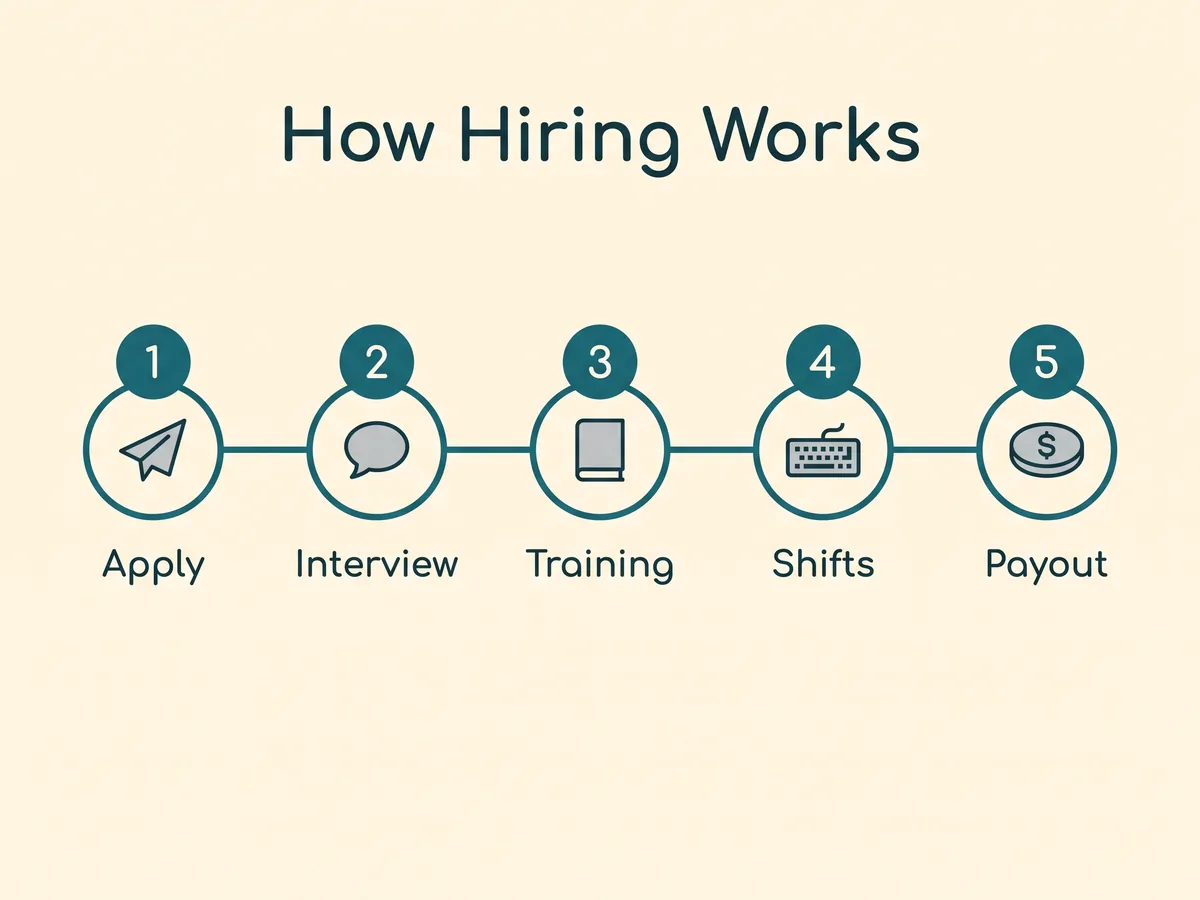
Yes, you can become a chat operator without experience — around 70% of ChatQuip operators started with none (internal observation). The path is five steps: apply, pass a short interview, complete free 5–10 day training, then start your first shifts, with your first payout landing within 14 days. The only hard requirements are English at B1 or above and a PC with stable internet.
I’m David Keller, Head of Training at ChatQuip. Over the past five years I’ve onboarded more than 900 chat operators, and the single most common thing they had in common on day one was this: no experience. Not a little — none.
So when people ask me whether they can become a chat operator without any background, my honest answer is the one I give in every training session: yes, and you’re in good company. This guide is the five-step path I walk beginners through, plus the skills that actually decide who succeeds and the mistakes that quietly trip people up.
The how-it-works page covers the process from the company’s side; this is the hands-on version — what you do, in what order, and how to do it well.
Can you really start without experience?
Yes. Around 70% of the operators I’ve trained started with zero experience (that’s my own observation across five years of onboarding, not a published statistic). Students, parents returning to work, people switching careers — most had never done anything like this before.
Here’s why that works. A CV tells me almost nothing about whether someone will be a good chat operator. Three other things do:
- Typing comfort. You don’t need to be a record-breaker, but you should be able to type without hunting for every key. Speed comes with practice, and I’ll show you how to measure yours below.
- Empathy. The job is holding a genuine, warm conversation. If you naturally read tone and respond like a real person, you already have the hardest-to-teach skill.
- Consistency. The operators who grow fastest aren’t the cleverest — they’re the ones who show up for the same slots week after week. That’s a habit, not a talent, and anyone can build it.
Let me put a face on that. One of the best operators I ever trained walked in as a shy first-year student who’d never had a job of any kind. Her typing was slow, she second-guessed every reply, and after day one she quietly told me she thought she’d made a mistake applying. What she had, though, was warmth — she genuinely cared how the person on the other end felt. Six weeks later she was a comfortable Junior, and her chats held attention longer than operators twice her age. Experience wasn’t the variable. Empathy plus showing up was.
None of those come from experience. They come from practice, and practice is exactly what the free training gives you. So let’s get into the five steps.
| Step | What it involves | Typical duration | Outcome |
|---|---|---|---|
| 1. Check the basics | 18+, English B1+, PC, stable internet | 1 evening | You know you qualify |
| 2. Apply | 2-minute form, no CV | 2 minutes + up to 24h reply | Interview invite |
| 3. Interview | 20-minute online chat | 20 minutes | Offer + training schedule |
| 4. Training | Free, guided, paid practice at the end | 5–10 days | You’re ready for real shifts |
| 5. First shifts & payout | Real chats at Trainee grade | First payout ≤14 days | Money in your account |
Step 1: Check you meet the basics
Before anything else, confirm you clear the bar. It’s deliberately low, but it is a real bar. You need to be:
- 18 or older.
- English at B1 or above.
- On a PC or laptop (not just a phone — you’ll be typing a lot).
- Connected to stable internet.
Four things. No diploma, no references, nothing to buy. The one people worry about most is English, so let me be precise about it.
B1 means you can hold a natural written conversation — understand what someone’s saying, reply in your own words, handle small talk and mild misunderstandings. It is not flawless grammar or a huge vocabulary. If you can read this article comfortably, you’re probably close.
To check for free, take the EF SET test — it’s a free, roughly 50-minute exam that gives you a CEFR level from A1 to C2. Land at B1 or higher and you meet our bar. If you come out just below, don’t give up: a few weeks of daily reading and chatting in English usually closes a small gap, and you can reapply.
While you’re at it, measure your typing on a free tool like TypingTest.com. Anything around 35–40 words per minute is a fine starting point; below that, ten minutes of practice a day will lift it quickly. This isn’t a pass/fail — it’s just useful to know where you stand.

Step 2: Apply the right way
The application itself takes about two minutes. There’s no CV, no cover letter, no portfolio. You give your name, a contact method, the position you want, and your English level. That’s it.
Because it’s so short, people assume it doesn’t matter how they fill it in. It does — not because we’re strict, but because the reply comes from a real recruiter, and a clear application makes the next steps smoother.
Here are the mistakes I see most often at this stage:
- A dead contact. Give a Telegram, WhatsApp, or email you actually check. The number-one reason a keen applicant goes quiet is simply that they missed the reply.
- Wildly overstating English. Claiming C2 when you’re B1 doesn’t help you — it just makes the interview awkward. Be honest; B1 is enough.
- Vanishing after applying. You’ll get a reply within 24 hours, usually sooner. Watch for it and respond, even if it’s just to book a slot.
Apply through the open chat operator role. If anything’s unclear, ask in that first reply — you’re not committing to anything by asking, and nobody is ever asked to pay a cent to apply.
Step 3: Pass the interview
The interview is a 20-minute online conversation, not an exam. No camera is required, you can do it from your phone or laptop, and there are no trick questions. I promise the recruiter is not trying to catch you out. To walk in fully ready, prepare with the 12 real questions we actually ask and the strong answers that pass on the first try.
Three things get checked: your written English (B1 is enough), how comfortable you are typing and holding a chat, and your motivation — why you want the work and how many hours you can give.
You can prepare in a single evening:
- Have a few real chats in English. Message someone, join an English-speaking group, anything that warms up your written flow. The interview is a chat, so arrive already in the rhythm.
- Know your hours. Decide honestly how many hours a day you can commit — the minimum is 4 — and which slots suit you. “I can do four hours most evenings” is a great answer.
- Read how the hiring works. Walking in knowing the process — training, grades, payouts — shows you’re serious and saves time.
Most candidates who reach this stage and meet the English bar move straight into training. If English is a touch below B1, the recruiter will tell you directly, and you’re welcome to improve and reapply. You lose nothing by trying.
Step 4: Get through training
This is where beginners become operators, and it’s free — always. Training runs 5 to 10 days depending on your pace, and my team leads it personally.
It’s practical from the first hour. You won’t sit through lectures; you’ll practise. Roughly, it unfolds like this:
- Early days — the platforms and the basics. You learn the tools, where messages come from, and the rules that keep both you and users safe.
- Middle days — the craft. This is the heart of it: how to write a message someone actually wants to reply to. Warmth, curiosity, good questions. This is the skill that decides your income later, so it gets the most time.
- Final days — paid practice. You handle real conversations with a trainer on hand, and this work counts toward your earnings. Nobody trains for free and walks away with nothing.
A word on pace, because it worries people: the 5-to-10-day range isn’t a test you can fail by being slow. Some trainees are ready in five days, others take ten, and both end up in exactly the same place. Faster isn’t better here — understanding is. If a concept hasn’t clicked, we stay on it. You are never rushed onto real chats before you’re ready for them.
My one piece of advice here: ask questions relentlessly. The trainees who pepper me with “what would you say to this message?” are always the ones who climb fastest afterwards. Training is the cheapest place to make mistakes — use it.
Step 5: First shifts and first payout
Once training’s done, you start real shifts at the Trainee grade, which pays $250–400 a month while you find your rhythm. You choose your own hours around a 4-hour daily minimum — no fixed schedule imposed on you.
The money starts fast. Payouts are weekly from the very first week, with a $50 minimum that rolls into the next week if you come in lower. You pick the method — PayPal, crypto, or bank card — and your first payout lands within 14 days of your first paid shift. Seeing real money in week two, not after a month, is the thing most new operators tell me kept them going.
What does a realistic first month feel like? Week one is often wobbly — every chat takes thought and your typing feels slower than you’d like. That’s normal, and it passes fast. By the second and third weeks the rhythm clicks: you stop composing each message and start simply talking. By the end of the month most committed starters are settling into a groove they can sustain, with a clear sense of what a good shift feels like and what it pays. Nobody feels fluent on day one, and you’re not expected to.
From Trainee, the natural next step is Junior ($500–800 a month), which a steady beginner reaches in about 2 months on our internal timeline. How? Two habits: hold the same weekly slots so returning users get to know you, and keep improving how engaging your chats are. For the full grade ladder and real pay ranges, see how much a chat operator earns in 2026 and the real pay ranges by grade.
What mistakes stop beginners?
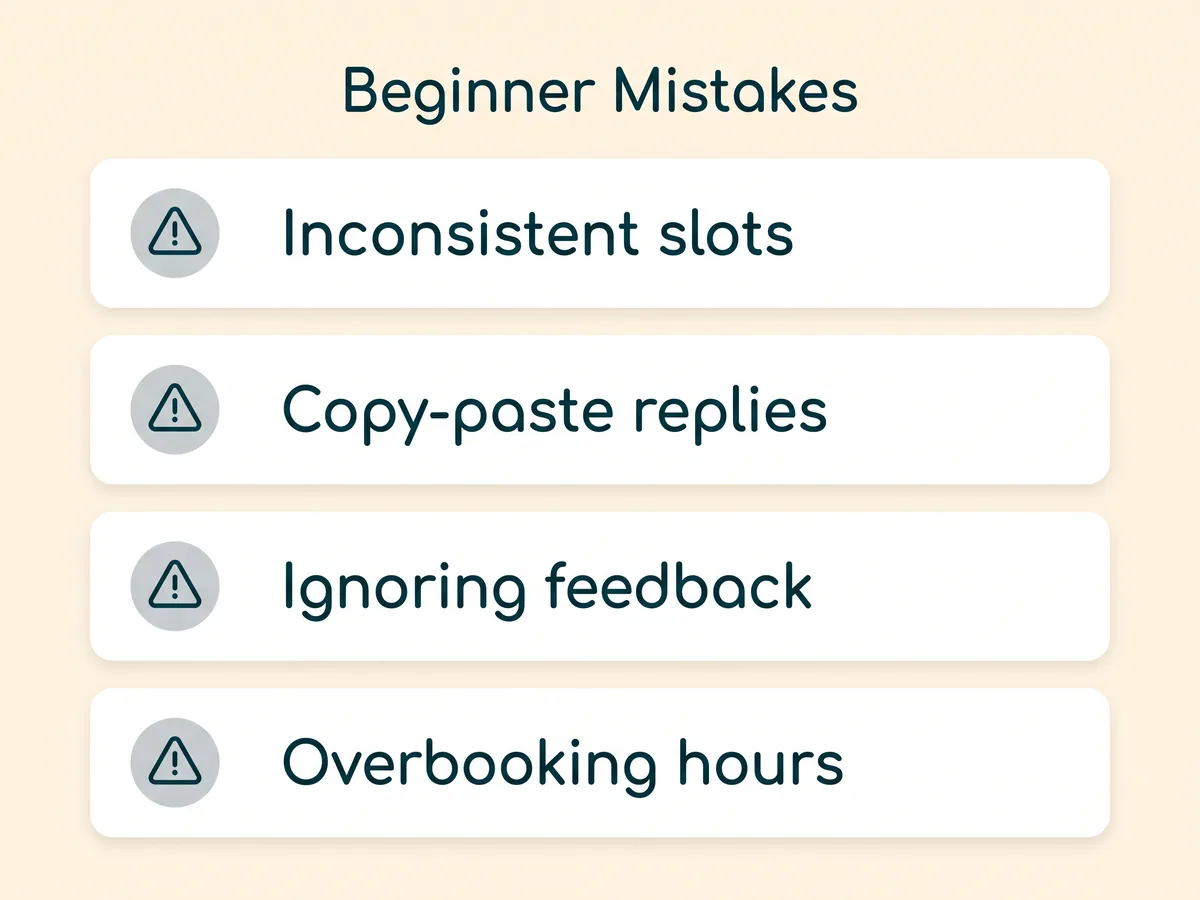
After 900+ operators, I can name the mistakes that stall people before they’ve given themselves a fair chance. Avoid these five and you’re most of the way there:
- Treating training as optional. The people who skim it struggle on real shifts. Those who lean in reach Junior first. It’s the highest-return time you’ll spend.
- Chasing hours instead of consistency. A frantic 8-hour day followed by three days off beats nothing — but four steady slots you never miss beats it easily. Consistency compounds; sporadic bursts don’t.
- Typing at people, not to them. Beginners often fire off correct but cold replies. Slow down, read tone, ask a real question. Engagement is the whole job.
- Going quiet when stuck. If a chat or a rule confuses you, ask. Silence is the one thing that genuinely holds people back — support is there for a reason.
- Expecting Senior money in week one. Trainee pay is a starting line, not the destination. The operators who stay past the first month are almost always earning meaningfully more by month two.
None of these require talent to avoid. They require showing up, staying curious, and treating those first weeks as the investment they are.
That’s the whole path — five steps, no experience needed, from an evening of self-checks to money in your account inside two weeks. If it sounds like a fit, the operator position is open, the full hiring path lays out the process end to end, and I’ll likely be the one training you. Come ready to ask questions — that’s exactly the habit that makes a good operator.
Frequently asked questions
Can I become a chat operator with no experience at all?
What English level do I need, and how do I check it for free?
How long until I get paid as a new chat operator?
How fast can a beginner move up from Trainee?
Ready to start earning?
Apply in 2 minutes — get a reply within 24 hours.
Apply NowRelated articles
Comparisons
Remote Chat Jobs in 2026: Every Type Compared, With Real Pay Ranges
A complete map of remote chat jobs you can do from home in 2026 — customer service chat support, chat moderation, entertainment chat operating, sales chat, and AI chat training — with realistic pay ranges, entry requirements, where to apply, and the scam patterns to avoid. By ChatQuip Head of HR Elena Marchenko.
Hiring Process
Chat Operator Interview: 12 Real Questions and How to Answer Them
What actually happens in a chat operator interview? Head of HR Elena Marchenko shares the 12 real questions she asks in 20-minute online interviews — with the reason behind each one, what a strong answer sounds like, and the red flags that make her say no.
Pay & Income
How Much Do Chat Operators Make? A Month-by-Month Reality Check (2026)
What does a chat operator actually earn in 2026? Head of HR Elena Marchenko breaks down the real pay by grade — Trainee $250–400 up to Senior $1,600+ — with a full grade table, an hour-by-hour income map, a week-by-week first-month story, and an honest comparison to other remote work.